6th Grade Here I Come Back to School Svg: What to Check Before You Print
Starting a new school year is a milestone, and the 6th Grade Here I Come Back to School Svg design has become a go-to for parents, teachers, and small business owners looking to celebrate that transition. Whether you plan to sell t-shirts, create tote bags, or make custom mugs for your print on demand shop, this design offers a versatile starting point. But turning a simple SVG file into a product customers love requires more than just downloading and hitting print. Many sellers and hobbyists run into preventable problems that cost time, money, and customer trust. Let us walk through the most common pitfalls and how to sidestep them.
Understanding the Design File Beyond the Preview
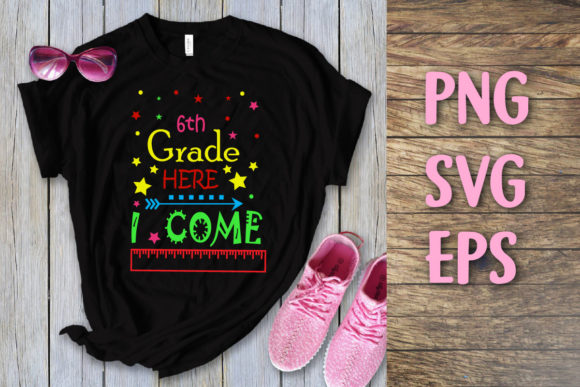
When you see a polished mockup of the 6th Grade Here I Come Back to School Svg, it is easy to assume the file itself will behave perfectly on every surface. That assumption often leads to trouble. The file you download may look crisp on screen but contain hidden issues that ruin a print or cut.
Not All SVGs Are Created Equal
A true SVG file is a vector format, meaning it scales to any size without losing sharpness. However, some sellers offer files that are actually raster images saved with an SVG extension. This trick causes pixelation when you enlarge the design for a hoodie or poster. Before you buy, open the file in a vector editing program like Illustrator, Inkscape, or Affinity Designer. If you see a single layer with no editable paths, you are likely dealing with a raster inside a vector wrapper. For professional results, insist on a genuine vector file with separate, editable paths.
Another overlooked detail is the inclusion of cut lines. If you plan to use a cutting machine for vinyl decals or iron-on transfers, you need a file with a clear, closed contour path. Some designs come with thick outlines meant for display but not for cutting. Always check that the file includes a dedicated cut line layer or can be easily converted without distorting the lettering or graphics.
Checking the License Before You Sell
This is where many beginners lose money. You find a great 6th Grade Here I Come Back to School Svg on a marketplace, download it, and start listing products. Days later you receive a takedown notice or your shop is suspended because the license only allowed personal use. Always read the license terms carefully. Commercial use licenses vary widely. Some allow unlimited sales, others cap the number of products you can sell, and many restrict use on certain platforms like Amazon or Etsy. If you are building a print on demand business, look for a license that explicitly permits commercial use with no cap. Keep a copy of the license file in your records for each design you buy.
Sizing and Scaling Mistakes That Ruin the Look
Even a perfect SVG file can produce poor results if you do not size it appropriately for your product. The 6th Grade Here I Come Back to School Svg often includes text and small details like stars, pencils, or backpacks. Scaling it too small for a mug or phone case makes those details unreadable. Scaling it too large for a t-shirt can push elements off the printable area or distort proportions.
Test the Minimum Size for Each Product
A good rule of thumb is to print a physical test or a full-size mockup before listing. For a t-shirt, the design should fit comfortably within the chest area, roughly 10 to 12 inches wide for adult sizes. For a tote bag, you might go slightly larger. For a mug, keep the design under 8 inches wide and ensure the smallest text is at least 0.25 inches tall. If the SVG has thin lines or tiny fonts, enlarge those elements in your vector editor before saving the final version. Customers will not read description text that is too small to see.
Account for Shrinkage and Placement
Different printing methods affect final size. Direct-to-garment (DTG) prints can shrink slightly after the first wash if the fabric is not pre-shrunk. Screen printing requires you to separate colors and account for registration marks. Vinyl heat transfer needs mirroring for certain materials. When you design for a hoodie or a tote bag, leave at least an inch of margin from seams and zippers. A design that sits too close to the edge looks unprofessional and may peel or crack faster.
Color Choices That Undermine the Design
The 6th Grade Here I Come Back to School Svg typically comes in a standard color palette like bright yellow, blue, red, or black. That palette may look great on a white background but clash badly on a dark hoodie or a colored mug. Many sellers apply the design as is, without adjusting colors for the substrate.
Consider the Substrate Color and Texture
If you print a dark blue design on a black t-shirt, the text becomes invisible. Instead, modify the SVG to include a white or light-colored outline or fill for dark materials. For lighter garments, the original colors usually work. For mugs and phone cases, always simulate the final look by overlaying the design on a photo of the product. A bright design on a white mug can look washed out if the mug itself has a matte texture that absorbs ink. Test a small run before committing to bulk orders.
Limit Your Palette for Cost Efficiency
Print on demand services often charge per color. A standard white t-shirt with a five-color design may cost noticeably more than a two-color version. Look at the 6th Grade Here I Come Back to School Svg and ask yourself which colors are essential. Maybe the text can be a single color and the graphic element a second color. Simplifying the palette saves money and reduces the chance of registration errors during screen printing. For DTG, color count matters less, but for vinyl cutting each color is a separate layer and a separate weeding step. Keep it manageable.
Overlooking File Format for Different Uses
One SVG file will not work perfectly for every application. You need different file formats for different products, and many sellers ignore this until a customer complains about a blurry mug or a misaligned decal.
Convert for the Right Output
For t-shirts and hoodies using DTG, a PNG with a transparent background at 300 DPI works best. Upload the SVG directly if the platform supports it, but always verify the preview. For mugs, a JPEG or PNG with high contrast is safer because the printing process compresses fine details. For vinyl decals and iron-on transfers, keep the SVG format but create a separate file with cut lines. For book covers and card invitations, a PDF or high-resolution PNG gives you the best print quality. Do not assume the original SVG will shine in every situation. Convert and adjust for each medium.
Keep a Master File and Export Copies
Sellers who keep only the downloaded SVG often struggle when they need to change a color or resize for a new product. Save a master file in your vector editor with editable layers, original colors, and no compression. Then export copies named clearly for each product type: "6th-grade-shirt-print.png", "6th-grade-mug-design.svg", "6th-grade-vinyl-cut.svg". This habit saves hours of rework and prevents version confusion.
Practical Steps Before Launching Your Product
Now that you know the common mistakes, here is a quick checklist to run through before you hit publish on your print on demand listing.
- Verify the file is a true vector with editable paths and no embedded raster layers.
- Confirm the license allows commercial use with no cap on sales or platform restrictions.
- Scale the design to fit your target product and ensure the smallest element is legible.
- Adjust colors for the substrate and consider a simplified palette for cost savings.
- Export the correct file format for each product type and test with a mockup or sample.
- Check placement margins to avoid printing near seams, zippers, or edges.
- Keep a master file and organized exports for future reuse.
Why the Effort Pays Off
Taking the time to evaluate your 6th Grade Here I Come Back to School Svg file and adjust it for each product reduces returns, negative reviews, and wasted materials. Customers notice when a design is crisp, properly sized, and color-harmonized. They are more likely to leave positive feedback and buy multiple items. For your print on demand business, this attention to detail builds a reputation for quality that keeps buyers coming back for every school milestone.
The back-to-school season offers a limited window of high demand. Being prepared with a well-checked, versatile design file lets you list on multiple product types quickly without scrambling to fix issues later. Whether you are selling t-shirts, tote bags, mugs, or custom decals, the same SVG can be your foundation for a whole product line if you handle it with care. Skip the shortcuts, test your outputs, and treat each product as a unique canvas for the design.
With these practices in place, the 6th Grade Here I Come Back to School Svg becomes more than just a downloaded file. It becomes a reliable asset that you can use confidently across t-shirts, hoodies, mugs, tote bags, phone cases, vinyl decals, iron-on transfers, book covers, card invitations, and any other surface your customers want. The effort you put in before launch directly shapes the satisfaction you get back from your audience.