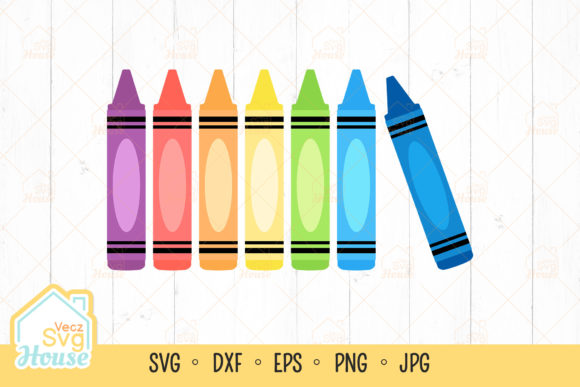
Incorporating Crayon Teacher Back to School SVG Files into Your Professional Workflow
When you invest in a digital asset pack like the Crayon Teacher Back to School SVG bundle, you are not just acquiring a set of images. You are gaining a flexible resource that can support multiple stages of your creative or business process—from initial planning and design to final production and even client delivery. This bundle, which includes SVG, EPS, DXF, PNG, and JPG files in high resolution, is designed to fit into real workflows for educators, small business owners, craft professionals, and marketers. Understanding how to integrate these files smoothly into your routine can save time, reduce errors, and expand the range of products and services you offer.
Understanding the File Bundle: What You Get and Why It Matters
Before you can integrate these assets into your process, it helps to know exactly what each file type does. The bundle includes five formats, each optimized for different tasks:
- SVG (Scalable Vector Graphics) – Ideal for cutting machines like Cricut or Silhouette, as well as for use in web design and vector editing software. It scales to any size without losing quality.
- EPS (Encapsulated PostScript) – A standard vector format used in professional design software such as Adobe Illustrator or CorelDRAW. It is suitable for print production and large-format signage.
- DXF (Drawing Exchange Format) – Often used for CAD and precision cutting applications. This file works well with laser cutters, engravers, and some plotter machines.
- PNG (Portable Network Graphics) – A 300 dpi raster image with a transparent background. This is ready for use in digital designs, social media graphics, scrapbooking, and print-on-demand mockups.
- JPG (Joint Photographic Experts Group) – Also 300 dpi, this format is ideal for sharing quick previews, adding to word processing documents, or printing at standard sizes without transparency.
Having all five formats means you can move between tasks without converting files or losing fidelity. Whether you are designing a classroom bulletin board, a set of custom mugs for a school fundraiser, or a digital invitation for a teacher's welcome event, this bundle covers the technical requirements from concept to output.
Planning Your Project Around Crayon Teacher Back to School SVGs
The most effective use of these digital files begins before you open any software. Start by identifying the specific outcome you need. Are you creating a set of vinyl decals for classroom organization? Or perhaps you are printing iron-on transfers for custom T-shirts for a back-to-school event? Knowing the end use determines which file format to prioritize and how to prepare your workspace.
For cutting projects, such as creating labels or decorative elements, the SVG and DXF files are your primary tools. Compatibility with your cutting machine is critical. Check whether your machine software accepts SVG natively (as most modern Cricut and Silhouette models do) or if DXF is required for older or alternative systems. Preparing a test cut on scrap material before committing to final stock can prevent waste and ensure the design width aligns with your substrate dimensions.
For print-focused projects, the PNG file with its transparent background gives you flexibility. You can layer it over colored backgrounds in design tools like Canva, Photoshop, or Affinity Designer without needing to remove a white box. Keep a master folder with all five formats, organized by project name and date, so you can quickly retrieve the right file when a client requests a specific format or when you shift from design to production.
Practical Applications Before, During, and After the Design Process
These files support each phase of a typical creative workflow. In the preparation phase, you can use the high-resolution JPG or PNG to create mockups for client approval. Share a simple comp showing the design on a T-shirt or a classroom sign without expending production effort. Once approved, move into the execution phase using the vector files (SVG, EPS, DXF). Vector files allow you to resize, recolor, and edit individual elements—such as changing the crayon colors to match a school's branding or a teacher's theme.
After the primary production, these files continue to have utility. You can reuse the SVG to create matching sets: a mug design, a sticker, and a card all from the same vector base. This consistency builds a recognizable aesthetic across products, which is valuable for small businesses selling back-to-school merchandise or for educators creating a cohesive classroom environment. Additionally, the transparent PNG can be incorporated into lesson plans, newsletters, or social media posts without needing to re-export from vector software.
Integrating These SVGs with Your Existing Tools and Resources
Your current software stack likely includes a combination of design programs, cutting machine software, and print-processing tools. The Crayon Teacher Back to School SVG bundle interacts well with these environments because of its standardization. In Adobe Illustrator, the EPS file opens as editable vector paths, allowing you to override colors, combine with other elements, or export to other formats. In Cricut Design Space, the SVG file can be uploaded directly, and the layers often remain intact for easy customization.
For users working with a Silhouette Cameo, the DXF file is frequently preferred. The key is to test file import early. Some machines interpret DXF curves differently, so scaling the design in the software before cutting ensures accurate dimensions. If you use laser engraving equipment, the DXF file paths can be directly fed into the controller software, reducing the need for manual tracing.
Resource management also matters. Keep your file downloads in a cloud-accessible folder, so you can pull the EPS or PNG from a tablet or laptop while on site. This is particularly useful when setting up a classroom or a pop-up shop where you need to adjust decals or prints on the fly. The instant download nature of the bundle means you can access the files immediately after purchase, without waiting for physical delivery.
Tips for Efficient File Management and Organization
Over time, you may collect multiple SVG bundles for different themes and seasons. Establish a naming convention that includes the theme, format, and date. For example: 2025_BackToSchool_CrayonTeacher_SVG. Store each format in a subfolder to avoid confusion when cutting or printing. Many designers also maintain a “master” vector file (EPS or SVG) that combines elements from multiple bundles, which can be saved as a reusable template for future projects.
Back up your files in at least two locations—your local drive and a cloud service. Since digital files are the core asset, losing them means losing the ability to replicate a product without repurchasing. Also, consider creating a “tested” folder where you move files after successfully using them on a machine or software. This reduces the risk of grabbing an untested file during a tight deadline.
Maintaining Quality and Consistency Across Projects
Quality control is easier when you work from vector originals. The SVG and EPS files in this bundle are described as high-quality vector files, meaning they contain smooth curves and precise paths. When scaling, avoid simply stretching the PNG or JPG; instead, revert to the vector version for size changes. This preserves sharp edges and avoids pixelation. For print projects, the 300 dpi PNG and JPG are suitable for most home and commercial printers, but for large-format prints (like posters), use the EPS or SVG to retain crisp lines at any dimension.
Color consistency is another consideration. The designs likely include bright crayon tones. If you need to match a specific school color, open the vector file in a program that supports CMYK or Pantone conversion. For cutting projects, color does not affect the cut line, but for print-and-cut workflows, ensure your machine software interprets the colors correctly if using print-then-cut features. Run a small test cut or print before mass-producing items like T-shirts, mugs, or vinyl decals.
Long-Term Value and Reusability
A digital bundle like this one is not a single-use asset. The Crayon Teacher Back to School SVG can be adapted for different events beyond the first use. The same crayon design could appear on a birthday invitation, a teacher appreciation gift, or a graduation celebration by changing the accompanying text or combining it with other elements from your library. Because the files are vector-based, you can tweak the layout, add new layers, or adjust proportions without starting from scratch.
For professionals who sell finished goods, this reusability directly impacts profit margins. One set of files can generate multiple product lines: stickers, window decals, iron-on transfers, scrapbook pages, and card designs. The included DXF and SVG formats also allow you to offer custom orders with minimal additional design time. Over a year, one bundle can save hours of manual design work and provide a consistent visual theme across your offerings.
Finally, remember that these are digital items with no physical shipment. The instant download—delivered as a zip file—means you can begin your project the same day. Store the zip file intact as an archive, and extract copies only when needed. This preserves the original file structure and prevents accidental modification of your only copy.
By understanding the role each file plays, planning your projects with the end use in mind, and maintaining organized, quality-controlled workflows, the Crayon Teacher Back to School SVG bundle becomes a reliable component of your creative process. Whether you are a teacher preparing a classroom, a small business owner launching a product line, or a designer fulfilling client orders, these files provide the flexibility and consistency needed to execute efficiently from start to finish.